


 8. Marketing
To the Table of Contents

Intro Chapter 8: Marketing
Marketing is all about selling a product. For Museums, the "product" is a visit to the Museum or to an exhibition.
When you know who your target audience is: how do you reach them? How do you tell them about your Museum or exhibition? How do you convince them to come and visit? Not once, but many times. And to bring their friends?
Market research is a first step. Where can you find your target group? Who are your competitors? What do they do that you can copy? Or do better?
Visitor research is a second step. How did the people who visit your Museum find you? What did they like, or not like? Read chapter 7 for more information about market and visitor research.
In this chapter, we summarise the basics of Marketing: what channels do Museums use, what do they do to make their messages hit their target.
8.1 Marketing a Museum?
Marketing is about promoting and selling a product or service. For Museums, the "product" is a visit to the Museum or to an exhibition. Today, marketing - and number of visitors - is as important for Museums, as it is for commercial businesses. Museums need visitors, even if it is only to show their governments and sponsors that their money is well used.
"Especially in Eastern Europe, many museum managers are still reluctant to associate their institution with concepts originating from the business world, such as investments, marketing, promotion or public relations. They fear that by adopting a business-like approach in managing their institution, the museums will no longer be considered as spaces of learning and culture, but commercial enterprises, interested not in preserving the heritage but in exploiting it only for financial reasons. The present paper argues why such an attitude is completely wrong and presents the benefits a museum could have by adopting a marketing approach."
from: Marketing as a key element in achieving museum’s mission , 2008
Like commercial businesses, Museums do market research to find out who their potential visitors are, how they can reach them, and what message they should send them. What do you tell potential visitors about your Museum or exhibition, how can you convince them to come and visit?
Museums also do market research to find out about the competition, especially at the planning stage. You do not want to start a Museum or set up an exhibition, if there is very strong competition nearby. On the other hand, successful Museums can be good examples: what do they do that you can copy?
Tools that most Museums use to promote their Museum:
- A brand strategy.
- A Museum website.
- Social Media.
- Email newsletters.
- Direct mail.
- Print advertising.
- Articles in magazines, journals, newspapers.
- Special tours, workshops, events, exhibitions.
- Pop-up exhibitions and workshops at conferences, festivals.
- Special benefits for Friends of the Museum: discounts, special tours, special events.
- Promo gifts: bags, buttons, clothing, key-chains with the name and the logo of the Museum.
In our Survey of Deaf Museums, we asked what tools Deaf Museums use to advertise their Museum. Most have a website and use social media, some do more - see below.
Further Reading:
8.2. A Brand Strategy
A brand identity is the visual profile of a product or service. It includes the name, the logo, the house style (font and colours). Apple is a brand, and so is MacDonald's. You see their logo or an advertisement and you immediately recognize the product.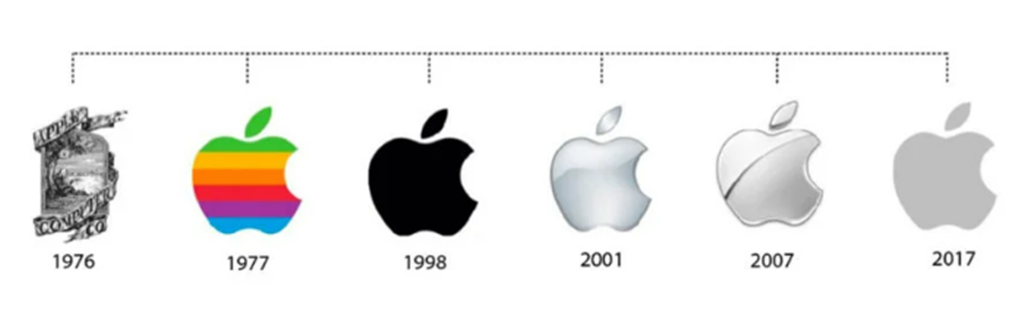
Source: From Fruit to Fame: The Evolution of the Apple Logo
Mainstream Museums use a brand strategy to be easily recognized as well. They use their logo on the building, on the website, on posters, catalogues, other printed materials and on items sold in the Museum shop.
"Before you start working with a designer to develop the brand identity for your museum you might want to consider whether certain fonts, colours and images are more appropriate than others.
If you are redesigning your museum's brand identity does it make sense to keep a recognisable colour palette? Could some element of the museum logo be kept or evolved?
Also, make yourself aware of competitors in your marketplace. Are there colours and other elements to avoid so that your museum's brand identity stands out?"
Source: How to Create a great Museum Brand Identity?
"The British Museum’s visual language is a system designed to visually represent the Museum. It reflects and reinforces the Museum’s values and core purpose. In line with the Museum’s positioning in the wider world, it is strong and confident, visually demonstrating that the Museum is a single organisation with a shared outlook and goals.
Key elements of the design are:
• a single Museum logo, undiluted by ‘sub-brands’
• typefaces (fonts), Baskerville and Akzidenz Grotesk
• the choice of objects from the collection to represent the brief
• a strong and consistent design style"
Source: Design guidelines, The British Museum
Further Reading:
8.3. Museum Websites
A good Museum website has to meet (at least) the following objectives:
- The target audience must be able to find it. For this, you need SEO: Search Engine Optimization. Under Further Reading, you will find links to guidelines for this.
- The first impression must be good: your target audience must be willing to explore the website to see what it has to offer.
- The content must be visually interesting, but the text should be attractive too: the correct tone and writing style, with content (information) that is to-the-point..
- Navigation must be easy, visitors should find exactly, and quickly! what they are looking for.
- The information on the website must be up-to-date; new information should be added regularly, so that visitors will keep coming back.
- Visitors must be able to see the information with all browsers, and on all devices including Tablets and Mobile phones.
- Again, last but not least, the website must be accessible for people with disabilities.
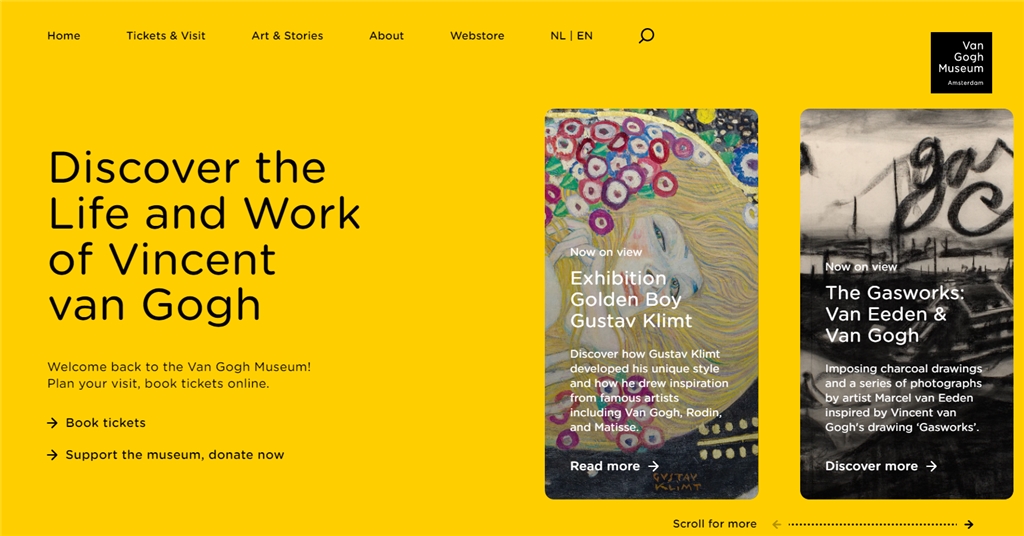
Homepage of the Van Gogh Museum, Amsterdam, October 2022
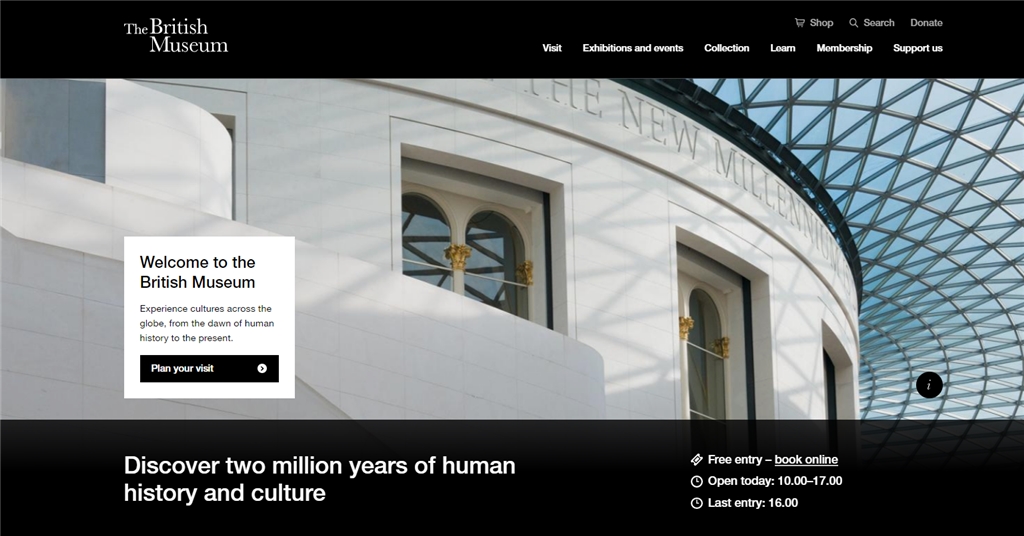
Homepage of the British Museum, London, October 2022
Further Reading:
- 5 Methods to Improve Your Museum Website
- 20 Top Exhibition Website Designs [Inspiring Examples], March 2022
- Search Engine Optimization. A Beginner's Guide
- 5 Simple SEO Tips To Get More Visitors To Your Museum Website
- SEO for Museums in 2022
- Google Analytics for Museums
- How to improve your site's visibility on Google Search
- Resources: Accessible Websites
8.5. A Museum Shop, Museum Café
Many Museums use a Museum shop and a café as important marketing tools: People may even come to the Museum shop or the café as their main reason to visit the Museum.
“Nowadays, whether it’s a long lunch discussing art or a quick pitstop for sustenance, the café is an integral part of the museum experience as a whole”
Source: https://elephant.art/ode-museum-cafe-spaces-essential-museum-experience/
A Museum shop and web-shop may not generate much income, but it can sell merchandise that advertises the Museum. Bags and T-shirts with the Museum logo, key-chains, books, calendars, postcards. At the Van Gogh Museum in Amsterdam, you can buy Van Gogh candles, cushions, vases, wallpaper, and more.
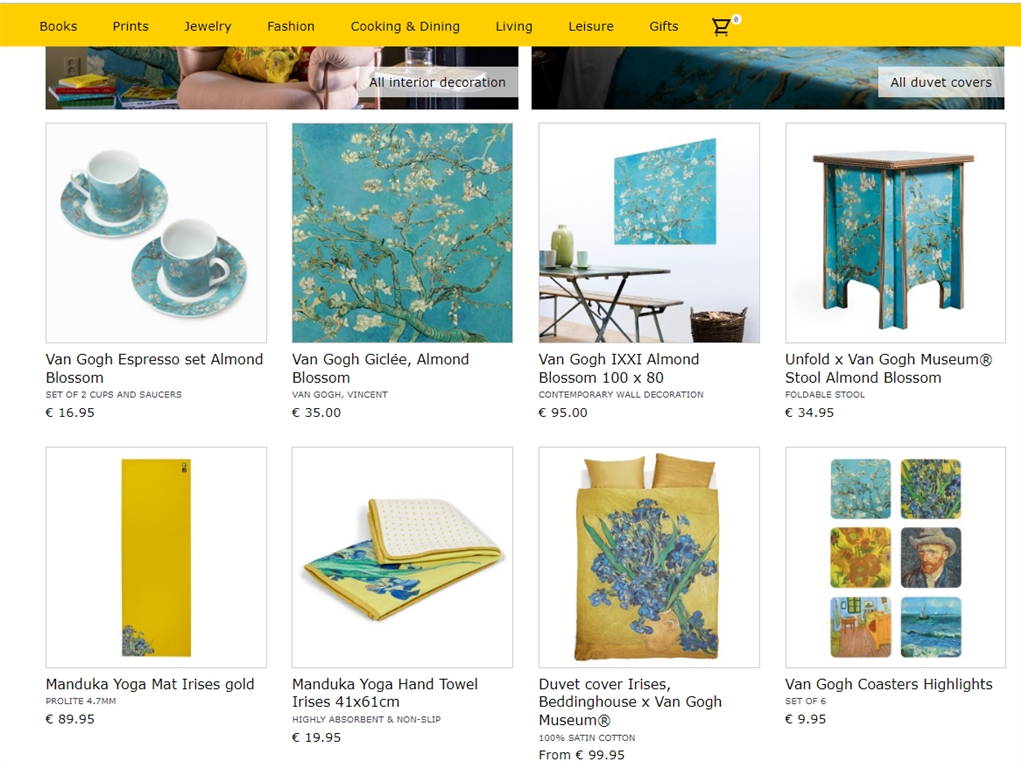
source: https://www.vangoghmuseumshop.comenseevangoghathome
Museums prefer to locate their shop near the entrance or the exit of the Museum, or both. Often you can only exit the Museum by going through the shop.
Further Reading:
8.4. Social Media
Most mainstream Museums use Social Media (Facebook, Instagram, LinkedIn, YouTube, Pinterest) to market their Museum. Setting up an account on these platforms is easy. Getting people to find your page, to read, like and share your posts and to follow you, takes more work. MuseumNext gives the following tips:
-
- Be authentic: develop a “voice” that is authentic and immediately recognisable as belonging to YOU.
- Involve your entire Museum, not just the marketing department.
- Involve the community - ask them to contribute to your posts, share posts from other communities and ask them to share your posts.
- Use eye-catching visuals.
- Use buzzwords - words that are trending in your field - and hashtag them (add #). These words can help your press releases and posts to stand out and get noticed by others.
Other tricks that help Museums to get noticed on Social Media:
-
- They use influencers: they ask people who have many followers on Instagram or Facebook to visit their Museum and to post photos of the Museum, event or exhibition on Instagram and Facebook , to share your posts.
- They use 'Instagrammable' exhibits and displays.
- They post podcasts and videos about exhibitions and events.
- They use International Museum Day and other relevant international and national days, birthdays, holidays to organise special events and to post about these. They start days or weeks in advance, and post regular updates to keep people interested. International Museum Day is an international day held annually on or around 18 May, coordinated by the International Council of Museums (ICOM).
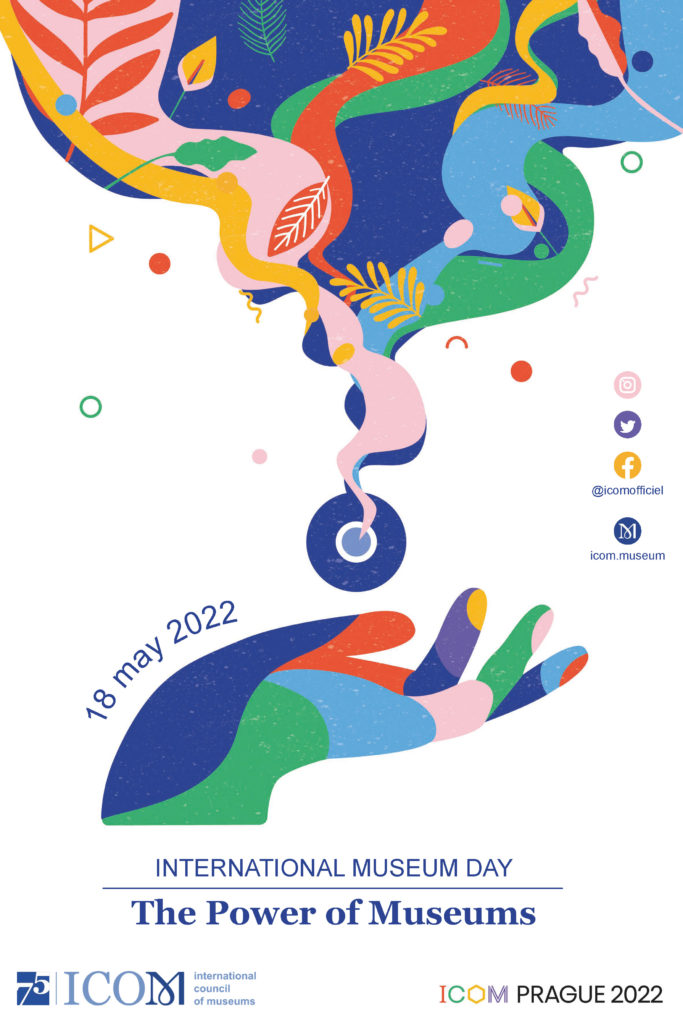
Source: https://imd.icom.museum/international-museum-day-2022/the-poster/
Further Reading:
